Woodland Animal Bunny Clipart: Beyond the Basics
There’s a certain warmth that comes with woodland-themed design. It’s rustic, a little bit magical, and taps into a sense of nostalgia and comfort. At the heart of many of these designs is a familiar, friendly face: the bunny. But not all clipart is created equal. A truly useful design asset needs to be more than just a cute picture; it needs to be versatile, high-quality, and ready for real-world projects. That’s where a well-crafted set like the Woodland Animal Bunny Clipart collection comes in. We’re not just talking about a single image, but a focused digital tool designed for creators who need reliability and charm.
The Anatomy of a Useful Design Asset
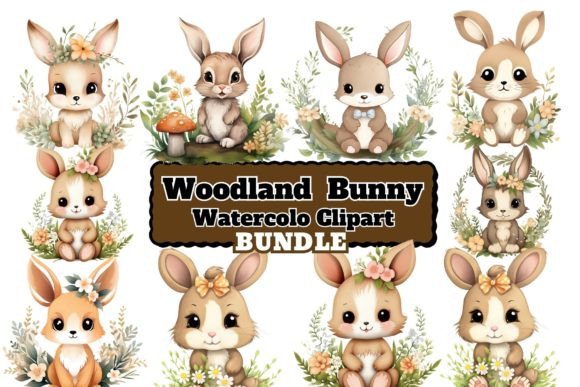
Let’s get specific about the Woodland Animal Bunny Clipart – 09 file. At its core, it’s a 1024×1024 pixel PNG with a transparent background and a resolution of 300 DPI. For designers, this translates to immediate practicality. The high resolution means you can scale it for print projects—like packaging design or editorial design in a magazine—without losing clarity. The transparent background is non-negotiable for layering in software like Photoshop or Illustrator, allowing the bunny to sit seamlessly on any surface, whether it’s a textured paper background for a scrapbook or a solid color block for a logo design concept.
Visually, this clipart leans into a modern yet timeless style. It avoids overly cartoonish proportions in favor of a more illustrative, hand-drawn feel that suggests personality without being childish. The lines are clean, the shading is subtle, and the overall composition is balanced. This makes it a creative font for the eyes—it communicates approachability and care. Think of it as a display font for imagery: it’s meant to catch the eye and set a tone, whether that’s for a children’s brand, a boutique’s brand identity, or a seasonal marketing campaign.
From Screen to Shelf: Real-World Applications
The true test of any design asset is how it performs across different mediums. This bunny clipart isn’t just for digital scrapbooking, though it excels there. Its clean lines and scalable format make it a powerhouse for entrepreneurs and small business owners. Imagine it as the central motif on product labels for artisanal goods, on the thank-you cards tucked into e-commerce orders, or as the mascot for a blog about sustainable living. In web design, it can add a touch of whimsy to a header image, an about page, or a favicon, helping to soften a brand’s digital presence and make it more memorable.
For marketers and content creators, it’s a tool for visual storytelling. Use it in social media graphics to announce a spring sale, create engaging Instagram stories, or design eye-catching pins for Pinterest. Its consistent style means you can build a series of related graphics that feel cohesive, strengthening visual recognition. When it comes to packaging design, the bunny can be part of a larger pattern, a standalone emblem, or integrated into typography. Pair it with a clean sans serif font for a modern look, or with a gentle script font for something more elegant and personal. The key is that it adapts to the context, not the other way around.
Integrating Charm into Your Creative Workflow
So, how do you decide if this particular clipart set is the right fit? Start by evaluating your project’s personality. Does your brand or project aim for warmth, nature-inspired themes, or a handcrafted aesthetic? If so, you’re on the right track. Next, consider the technical needs. The 300 DPI PNG is standard for professional print, but always check the final output size against your project’s requirements. For a large banner, you might need to verify the pixel dimensions work at scale.
A smart practice is to test the asset in context. Download it and drop it into a mockup of your logo design, your website header, or a sample social media post. Does it hold its own? Does it clash with your existing color palette or other font pairings? The beauty of a versatile asset like this is that it often works as a accent rather than the main event, complementing your typeface choices rather than competing with them. It’s the supporting actor that makes the star shine brighter.
Finally, a note on professionalism: always review the licensing. A quality commercial font or clipart set will have clear terms for both personal and commercial use. Knowing you have the right to use the asset in client work, on products for sale, or in published materials is crucial for avoiding headaches down the line. It’s the kind of due diligence that separates a hobbyist from a professional creator.
In the end, the Woodland Animal Bunny Clipart is more than just a picture of a rabbit. It’s a carefully crafted piece of a visual language, one that can help tell your brand’s story, connect with your audience on an emotional level, and bring a consistent, polished look to a wide array of projects. It’s a small detail that can make a significant difference in the perceived quality and care behind your work.